Open topic with navigation
Adding a Drop Shadow
The DropShadow gizmo allows you to create a drop shadow for any input image that has an alpha channel with values greater than 0. To add a drop shadow an image:
|
1.
|
Select Filter > DropShadow to insert a DropShadow gizmo after your image Read node. |
|
2.
|
Connect your background image to the DropShadow gizmo's bg input. Your image and drop shadow are merged over the background image. |
|
3.
|
In the DropShadow gizmo properties, check enable drop shadow to enable the drop shadow effect. |
|
|
with drop shadow
disabled |
with drop shadow
enabled |
|
4.
|
If you want the drop shadow to be the same color as the input image, enable inherit input color. |
Otherwise, use the color controls to select a color for the drop shadow.
|
|
|
| with black selected |
with the inherited
input color |
|
5.
|
Use opacity to adjust the opacity of the drop shadow relative to the input's alpha channel. |
|
|
| Opacity set to 0.4 |
Opacity set to 0.8 |
|
6.
|
To adjust the direction of the shadow, use the angle slider. A value of 0 or 360 equals left direction. |
|

|
|
Angle set to 0
(or 360)
|
Angle set to 225 |
|
7.
|
Use distance to set the distance of the shadow from the input content. |
|

|
|
Distance set to 5
|
Distance set to 15 |
|
8.
|
If you want to blur the shadow, increase the softness value. |
|

|
|
Softness set to 0
|
Softness set to 10 |
|
9.
|
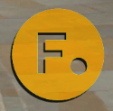
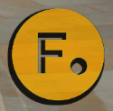
If necessary, set the shrink/expand slider to a negative value to erode the shadow or a positive value to dilate it. |
|
|
|
Shrink/expand
set to 0
|
Shrink/expand
set to 3.5 |
|
10.
|
Use the input [operation] bg dropdown menu to select how you want to combine the input and bg inputs. |
 Topics In This Section