|
| | Input (Op *) |
| |
| | Input (int32_t opInputIndex, const OpGraphLocation &location) |
| |
|
| Input (Op *, const OpState &, Node *_node=nullptr) |
| | If _node is null then it will be copied from Op, if valid.
|
| |
|
| operator bool () const |
| | Note that a valid input must have a non-null Op, but can have a null Node.
|
| |
|
Input & | operator= (const OpGraphLocation &b) |
| | Note the copy operator leaves index unassigned.
|
| |
|
int32_t | index () const |
| | Index number of the input in the Op's inputs() list.
|
| |
|
| OpGraphLocation (Op *_op) |
| | graphState and node are copied from _op, if valid.
|
| |
|
| OpGraphLocation (Op *_op, const OpState &_state, Node *_node=nullptr) |
| | If _node is null then it will be copied from _op, if valid.
|
| |
|
bool | isNodeGraphLocation () const |
| | Returns true when both op and node are valid.
|
| |
| bool | isOrphanedOp () const |
| |
|
| operator bool () const |
| | Note that a valid OpGraphLocation must have a non-null Op, but can have a null Node.
|
| |
|
bool | operator== (const OpGraphLocation &b) const |
| | Only compares the Op* and its graph state.
|
| |
|
bool | operator!= (const OpGraphLocation &b) const |
| |
|
bool | operator< (const OpGraphLocation &b) const |
| |
|
bool | operator> (const OpGraphLocation &b) const |
| |
|
const Hash & | opHash () const |
| | Hash from graphState. Note - may be different than op->hash()!
|
| |
|
bool | opHashAnimates () const |
| | Does the graphState opHash animate? Note - may be different than op->varyingOutputHash()!
|
| |
|
bool | varyingOutputHash () const |
| |
|
const Hash & | editVersionHash () const |
| | Edit version hash from graphState. Note - may be different than op->editVersionHash()!
|
| |
|
const Hash & | topologyHash () const |
| | Hash of input graph structure unaffected by knob values.
|
| |
| const char * | nodeName () const |
| |
| std::string | nodeIdentifierName () const |
| |
| void | applyTimeRemapping (const fdk::TimeValueSet &outTimes, fdk::TimeValueSet &inTimes) const |
| |
|
void | applyTimeRemapping (const fdk::TimeValueList &outTimes, fdk::TimeValueSet &inTimes) const |
| | Same but with a time list source.
|
| |
|
Iop * | iop () const |
| |
|
DeepOnlyOp * | deepOnlyOp () const |
| |
|
ParticleOp * | particleOp () const |
| |
|
AxisOp * | axisOp () const |
| |
|
LightOp * | lightOp () const |
| |
|
CameraOp * | cameraOp () const |
| |
|
SceneOpI * | sceneOpI () const |
| |
|
AxisSceneOp * | axisSceneOp () const |
| |
|
CameraSceneOp * | cameraSceneOp () const |
| |
|
LightSceneOp * | lightSceneOp () const |
| |
|
GeometryProviderI * | geometryProvider () const |
| |
|
GeomOp * | geomOp () const |
| |
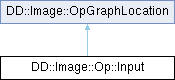
A single Op input containing the location of an upstream Op, the state for the Op at this Op's input connection point, and an upstream Node if one exists.
A valid Input must have a non-null op pointer, while node can be null. A null node will commonly occur when Ops are directly connected together without creator Nodes.
Note that if non-null node may not be the same Node that op was generated by since there may be additional non-OpNodes in between op's Node and this Op's Node. When this is the case graphState may be different than the one stored in op due to those additional Nodes modifying the graph info.

 Public Member Functions inherited from DD::Image::OpGraphLocation